


With our Non-Destructive Testing (NDT) solutions, you no longer need to worry about costly repairs or unexpected equipment failures.
We help you detect and address potential issues before a minor defect turns into a major failure — minimizing maintenance costs, extending equipment life, and ensuring uninterrupted production.
Utilizing high-frequency sound waves to detect internal cracks, inclusions, and discontinuities.
Using X-rays or Gamma rays to reveal hidden defects in welds and metallic structures.
Detecting surface cracks and discontinuities through dye or fluorescent penetrant solutions.
Using X-rays or Gamma rays to reveal hidden defects in welds and metallic structures.
Identifying surface and near-surface defects in ferromagnetic materials.
Initial and detailed visual examination using optical and magnification tools.
Employing electromagnetic induction to detect surface and subsurface flaws.
Detecting leakage points in pressurized systems and components.
Monitoring acoustic waves generated by crack propagation or structural damage.
Using thermal imaging to identify high-risk or faulty areas in equipment and structures.
Measuring surface resistance and material hardness against deformation.
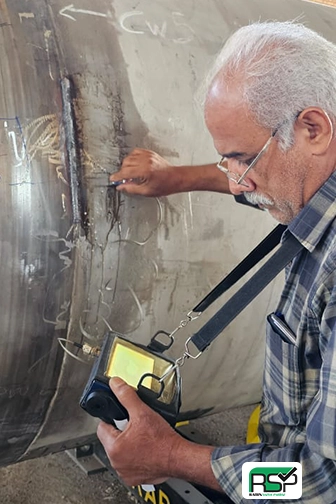
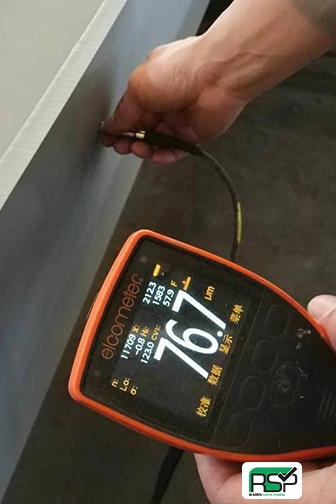
Non-Destructive Testing (NDT) is one of the most essential tools in oil, gas, petrochemical, power generation, and construction industries — enabling quality assessment and defect detection without damaging components or structures. Choosing a specialized and reliable NDT company is critical, as precision execution and advanced equipment directly impact inspection accuracy.
Robin Sazeh Pardaz, with expert engineers, adherence to international standards, and innovative solutions, is recognized as one of the most trusted NDT inspection companies in Iran.

NDT allows you to inspect a part’s integrity and quality without causing any damage — reducing costs, preventing downtime, and ensuring project safety.
Destructive tests damage or destroy the sample, while NDT identifies surface and internal defects without harming the component.
Cracks, porosity, incomplete fusion, voids, inclusions, and discontinuities — depending on the selected method (UT, RT, PT, MT).
It depends on the testing type and project scope. Methods like PT or MT are quick, while RT or UT require more time but remain efficient and cost-effective.
Oil & gas, petrochemical, power plants, automotive, aerospace, construction, bridges, and pipeline systems.
Yes. Upon completion of each inspection, a comprehensive and documented report is issued in compliance with international standards (such as ASME, AWS, and ISO), enabling clients to make informed and confident decisions.
Rabin Sazeh Pardaz offers complete supervision and inspection services for your project with the highest quality, on-time delivery, and minimal cost.